Category Archives: Unorthodox Writing Tips
Unorthodox Writing Tips 12: It’s About Time
One of the many things I’ve gotten wrong in my books over the years is the amount of time it takes to perform a task, travel from place to place, hold a conversation, pause for dramatic effect
…
No, really. I’ve written a page of dialogue before and in my mind hours had gone by. When I’ve gone back and read what I’d written the conversation would have taken all of four or five minutes. Heck, Even when I did the podcast version of V&A Shipping I had to correct some timing issues. I had to figure out how long something took because it just didn’t feel correct after going back and reading it.
I have a stop watch. No, really. I have a stop watch. If my character is going to do something, cook dinner, get dressed, build a bomb, tie a knot, I need to know how long that task will take. Now I’ve never built a bomb, but understand the dilemma here. The time it takes your character or characters to accomplish a task needs to feel right. As I mentioned, that one page of dialogue was a short conversation, but in my mind I needed them to be in a different place after the conversation.What did I do?
The conversation took place while the characters were walking from one place to another. I needed a certain amount of time to pass while they walked and talked. This scene needed some fixing not only with the distance traveled, but with the flow of the conversation. What did I do? I took a walk and timed how long it would take at a casual pace to travel a certain distance. Even the walk, not enough time had passed in my story. I needed to figure out what would slow them down.
Okay, color me dumb here. The walk they took was in a heavily-congested, downtown area. Brilliant me I walked in a straight line. Taking a trip to downtown San Diego provided what I needed. I’ve walked with groups downtown before. There are a large number of things that will stop you as you walk. Window shopping, street vendors, street lights, cars, bikes, other pedestrians. Not only did all of these items add a little flavor to the scene I was trying to fix, it provided the length of time I was looking to introduce in the scene. It also helped to break up the dialogue so it wasn’t a long stream of talking.
This scene would have worked as-is, but but stopping myself and timing the event to make sure it had the right feel helped me flesh out a scene that, once I’d re-written it, worked so much better than the original.
Am I suggesting you get a stop watch and time every little thing you do? Well, not everything, but I do recommend you watch the clock when you’re doing something you would expect a character in your book to do. A minute can be much longer than you suspect and an hour much shorter than you know. Give it try. Maybe you’ll discover something more than just the amount of time something takes.
Until Next Time!
WOO WOO!
Unorthodox Writing Tips 11: Try Somewhere New

I’m a curious person. I like to try new things and I’ve never shied away from trying something different. Earlier in the week I needed to take my favorite daughter to 7-11 to get a snack (old mother Hubbard went to the cupboard and the cupboard was bare).
In the same little strip mall is a sweet shop, Pistachios. For us this has been an ongoing joke. I want to say they’ve been setting the place up for a few months now and we’re trying to figure out when they’ll open the place. We put our faces up against the glass and peeked inside. There were some lights on the left side of the store wall that look like they will hold signage and a nice look counter behind which are some shelves with a few bags of pistachios and a couple boxes of candy. That’s about it. It looks bare, but I’m hopeful it’ll be filled with good things to be had by all.
Walking from Pistachios to 7-11 is the Rancho Market and Bakery. Now I’ve only been in the area for a few months and I’ve seen it dozens of times. I kept telling myself I needed to actually go inside and look around. I figured, why not teach my favorite daughter not to be afraid of going into a new place. I diverted my steps and went inside.
“Papi? Where are you going?”
Let me interject here. I have a tendency to walk astray just to confuse my favorite daughter. It’s funny most of the time and sometimes I do what I did on this day. I didn’t say anything, I just entered the store.
Inside standing next to the fresh fruit was a group of men. They could have been Greek, the could have been Arabic, I didn’t know. They just had that swarthy complexion that I’ve always associated with the Mediterranean. Now I was even more interested. Sure the Market and Bakery was located in Rancho San Diego and I expected it to be run by Mexicans, so I was a little surprised.
Inside I found a great selection of fresh cheeses I hadn’t seen before and a large number of dairy products. Even a great selection of salamis and meats. I still had no idea of the nationality of the products displayed. I didn’t talk to anyone until I reached the dessert section. I’m a BIG fan of desserts. Each looked amazing. I had to ask.
“What type of desserts are these?”
“Baklava”
Ok, I’ve seen baklava before. He wasn’t going to get away with that simple of an answer.
“This doesn’t look like Greek baklava.”
“This is middle-eastern baklava. In Lebanon we have over 150 varieties of baklava.”
Okay, now I was really in new territory. My favorite daughter kept picking out ones to buy, the man gave me a 5 minute lesson about baklava, and $8 we were out of the store. I went back the next day and bought $5 more. I know I’ll be going back again and I’ll be trying more than just the baklava.
What did I learn? I learned lot more than just what kinds of baklava are available. It’s something I’ve know and try to put to practice.
1) Don’t be afraid to walk into a store and talk to the proprietor
2) Don’t be afraid to try something new be it food, a book, a new sport, anything.
3) Be opened minded with the experience.
4) Seek out opportunity, don’t just run into them by accident.
Do I think baklava will make it into my writing? Probably not. But one thing I’ve heard over and over with writing advice, write what you know. If you limit yourself a little box you’ll only ever be able to write about that same little box. The more you allow yourself to experience the more flavor you’ll add to your writing. Get out there. Try somewhere new. You’ll thank yourself one day.
Until next time!
WOO WOO!
Unorthodox Writing Tips 10: A Different Point of View 2

Have you ever been sitting and staring at the same four walls for hours on end? Something about the doldrums and monotony can drive a person insane Not only that, but it can suck all the creativity out of your brain. Sure I know all about getting into the habit of sitting in the same place to do your writing, but sometimes getting a fresh view point is critical to keeping the creative juices flowing.
I normally do my writing in the same place every time that I write. Today, I’m sitting out in front of the gym where my daughter has volleyball practice. The sun is shining, the wind is blowing, it’s 65F outside. It’s a beautiful day. Why would I want to sit inside on a day like this?
Moreover, why would I not want to write on a day like this? I got up early, did my walk, and I’m all ready to do some writing. I don’t have internet access. I don’t have any distractions. I have a fully charged netbook with a keyboard that helps me type faster (I searched far and wide for this little sucker). It’s the perfect time to sit and write.
Not only that, but sitting in a different place engages a different part of my brain. It breaks me out of the normal routine of writing. I feel energize sitting outside today. There are different sounds, a different background to look at, even different people to watch (I’ll do a people watching post one day soon).
One thing I’ve always found to help break me out of a writing rut is to put myself in a different location. It’s so easy to fall into a routine of bad habits. How often have you wanted to sit down and write and wound up doing anything but write? If you have the means with a laptop, netbook, tablet, or some other device, pick it up and move somewhere else. This will be the first step in breaking the bad habit of not writing when you want to write and help create the good habit of writing.
It may even help you with finding where you are your most productive. I’ve learned that I can’t write my best when sitting at my desktop so I’m rarely there any more. It’s too easy to get distracted by facebook, twitter, email, a game, sorting my ebooks, or any number of things.
I actually do my best writing in different locations. As I said, today I’m sitting in front of the gym at my daughter’s volleyball practice. Later today I might sit on a chair outside if it’s still warm enough. I’ve sat at the kitchen table or on the couch.
Don’t let location stop you. There are an abundance of places you can go to write. A library, Starbucks or any other local coffee shop, the local park, you could even take your portable device with you and write while you’re having dinner at some restaurant. Anywhere that you can set up and start typing. This is your chance to use your imagination and find different locations to write. Don’t let your current view distract you from getting your writing done.
Until Next Week
WOO WOO!
Unorthodox Writing Tips 9: It’s about time.
As I’m sitting here typing this post, I’ve set a timer. I’ve been doing this recently when I need to accomplish a task and at the same time, I need to do some writing. I can’t be in two places at the same time, but I can still work on both at the same time. Here’s what I’ve been doing.
Today I need to take down the Christmas tree. I also wanted to put out another Unorthodox Writing Tips.I want to post my goals fr 2012 and a look back at 2011. Then after all that I need to get some actual writing done. Did I mention that I also need to take down the Christmas tree.
So how am I going to be able to get all this done in a single day? I set a timer. Every fifteen minute I switch tasks. I set the timer for fifteen minutes and I’m working on this blog post. When the timer goes off, I’ll set it again for fifteen minutes and work on disassembling the tree. And back and forth until the tree is down and clean up complete then I’ll spend time on just writing.
You may be thinking that this is an awkward way to write. You’re up and down, up and down. Well, yes. Yes I am. I’ll be up and down multiple times. But when I’m taking down the tree, I’m still writing. I’m thinking through what I want to put down next. Fifteen minutes of thinking about writing speeds up my output during those fifteen minutes when I’m actually writing. That, combined with having a timer keeping me on pace forces me to write and write faster during those fifteen minute episodes. I don’t check email, I don’t look at facebook or twitter. I don’t have time. I have a task to get done. If I’m going to include anything else, I’ll schedule fifteen minutes for it. I’ll take a break each hour and a half or two hours, but for the most part, it’s fifteen on, fifteen off.
There’s something about seeing a timer there, counting down that forces my brain into gear letting me know that time is tick tick ticking away and I need to get the words down before my time is up. As I said, combined with the fact that I’m also thinking about what I’m going to write during those fifteen minutes off helps me prepare to actually sit down and write the words. I find I have less time starting at the screen and trying to will the words to appear and more time sitting and actually writing.
Combined with the fact that I’m getting more than one thing done at a time, this method is really working for me. Not only that, but I’ve also discovered that fifteen minutes can result in roughly five hundred words when I’m pushing myself. I’ve changed my attitude from “I only have fifteen minutes” to “I HAVE A WHOLE FIFTEEN MINUTES!”
Give it a shot. Set a timer and time your self. Whoops, timer went off. Time to get back to that Christmas tree. It’s not going to take itself down.
Until Next Time!
WOO WOO!
Unorthodox Writing Tips 8: Prime the Pump
Now that winter is nearly upon us, and for many snow is one the ground and piling up, I can’t help but think back to when I was a kid growing up in Minnesota. Talk about cold. The winters could be devastating.
One thing I remember was living on well water. If the pump got too cold it would freeze up. So we kept a heater in the well house to make sure that didn’t happen. Each day we’d go out and check on it to make sure that the heater was still running and there wasn’t too much snow on our around the well house.
During the summer we also had to keep on eye on the pump, but for different reasons. Sure if your pump froze up it took a long time to unfreeze it to get it running again, but during the summer we would have a different problem. The pump would lose its prime.
What does that mean? It means there wasn’t any water in the pump. Somehow air had gotten into the lines and the water drained out and no more water would flow. The prime is what kept the water flowing and flowing in the correct direction. If there wasn’t any water in the pump, we’d have to go over to the neighbor’s house to fetch a bucket.
Priming a pump isn’t an easy task. It involves starting and stopping the pump at certain intervals, pouring in water at the correct time, and bleeding any air from the system. Air is your enemy when it comes to a pump and a leak will cause the water to drain out. Obviously doing this in the dead of winter in the Middle of Minnesota was the worst, but it had to be done from time to time. It was all part of owning a pump.
Think of your brain as a well of words. Those words are just crying to come out. Sometimes the words just flow freely and everything is running smoothly. Other times it might back up and you struggle to get the words on the page. Still other times you feel spent and dried up.
Prime your pump. There are a lot of words out there. If you’re at a stuck point or just can’t get anything going, try something a little different. Here are some things I’ve done to get restarted.
Re-write a paragraph. Pick anything you’ve written before or pick something from your favorite author. Just retype that exact same paragraph word for word. Don’t try to change anything, but as you’re typing, think about what you can do differently. Once you’ve retyped that paragraph, type it again with the changes you had in mind and keep thinking as you type it out, what you’d make different again. Repeat this process until you feel ready to get back onto your WIP.
Free Write. Just type whatever comes to your mind. Don’t worry about spelling or grammar. Just get the words out as quickly as you can. Don’t worry about where your mind takes you, just let it roam and type out everything you can. Keep going until you fill a page and you’re ready to type more. Stop before you run into a wall, but once you’re moving along smoothly, hop back into your WIP and start typing.
Describe the next scene. This may sound weird, but take a moment or two and just describe what you think will be happening in the next scene you’re looking to write. If you’re doing a longer work or a short, it doesn’t matter. Type up a paragraph where the scene is going to go. I’ve done this before and there have been times where I’ll have that ‘Ah-ha!’ moment and I’m off and running even before I finish that paragraph. Some scenes can be dull, you need to find what about that scene excites you and once you’ve identified that part, you’re ready to write.
Do a blog post. Gee, guess which method I’m using right now? I’m looking at my WIP and I’m thinking over the scene, but not letting the words come out. I’m just sitting and staring. That’s when I thought about growing up in Minnesota and the trouble we used to have with our pump from time to time. It seemed as though it would make a great Unorthodox Writing Tips post, so I wrote it up.
Sure there are other methods you can try. It may be just finding the method that’s right for you. It should be something that takes a large amount of time. This blog post, for example, took me twenty minutes to write. Once I got into the flow of it, the words just started coming. I plan on taking that momentum and applying it to my WIP before I lose it and need to prime the pump again. I’d better get at it.
Until next time!
WOO WOO!
Unorthodox Writing Tips 7: Plotting and Planning and Playing Goalie
I’ve always written more for my own entertainment rather than writing for someone else’s. I’ve written quite a bit. To date I’ve completed ten novels, and I have four others started with ideas for five different novels. Only four are part of a series, the rest are all the first of a potential series, but work as stand alone novels as well. I have also completed quite a number of short stories.
One thing I have mostly avoided. Plotting. I usually come up with an idea, have a vague direction, and go for it. Yes, I’ve written by the seat of my pants. This has lead to some good stories (I feel) but overall I always had a direction in mind and on occasion I would end up stuck. What I never did was write down the actual plot and direction, be it for shorts or novels.
I plan on changing this. I’m going to start writing at least a paragraph plot that will give beginning, middle, and end. Obviously I can flesh out the details as I write, but I’ll start with the act of getting the idea on paper (1st draft?). What I hope to achieve by doing this is getting the idea down and not just letting it flounder around in my brain until I’ve talked myself out of writing the work. When I was at my most productive I kept a running log of story ideas and I’d cross them out as I’d complete them. This helped me with writing one hundred short stories in one year. I doubt I’ll try to write that many again, but this leads me into my next topic…
Planning is another thing I’ve never done well. I would write stories, send them out, and start the next. I kept an excel spread sheet and made sure not to send the same story to the same place twice. I’ve long since lost this spreadsheet, but it was interesting to keep track of the ‘red’ cells which noted rejections and ‘green’ which noted publication and even the ‘yellow’ which showed waiting response.
What I didn’t have when I did this was a clear plan of action. It was just write, submit, and hope for the best. I didn’t know why I was doing it other than to try and gain publishing credits and improve my writing. Obviously I stopped as the rejection process is grueling and after hundreds of rejections it just wore me down (and the year ended). Once I completed that year I had intended to get back to writing novels, but I never sent anything out. Rejection of a short story was easy to take, but a novel? I didn’t think I’d be able to handle that kind of rejection.
It’s all part of the game, though. Rejection is just getting you one step closer to publication. So I now have a plan for getting my works out there. Beyond that I’ve taken on an ambitious project that will run parallel with Scott Roche. The idea is to write, edit, and publish a short story each month during 2012. Sounds ambitious, doesn’t it?
I’m excited, but I know I’ll never, ever, be able to complete this task without a plan. I have explained to my wife that my writing needs to move from a hobby to something more like a part time job if I’m ever to make it successful. I need to plot my stories so I’ll have a direction. I need to plan my time so I’ll be able to perform the work.
So where does playing goalie come in? Plots and Plans are nice, but I need to have an overall direction. I had always wanted to be a published author before I was forty years old. Well, that ship has sailed. Why? I let life happen and didn’t make life happen. I am going to change that by setting goals. Not just setting goals, but sharing those goals with my friends and family. I’ve started writing down where I want to be at the end of 2012 and it just starts with the ambitious project of a short story a month. It also includes getting worked cleaned up and/or completed and finally getting those works in front of a publisher or agent.
Yes I’ll be self publishing my shorts, but I am going to look for traditional publication for some of my works. I’ll also be continuing to self publish works as well. I had an ambitious desire for 2011 to have three books out, but I didn’t follow through and I now know why. I didn’t set out clear, definable goals.
I’ve read J.A. Konraths’ blog. I’ve read Mike Stackpole’s blog and newsletter. What I haven’t done is apply those teachings. Yes, being creative is a wonderful thing, but unless I treat my work as work and a business, I’ll only have limited success. So included in my goals for 2012 are to seek out ways to promote myself. Ways to get more eyes on my work. To have a definite number of sales. I’ll, of course, share those in my blog.
If all goes well, next year I hope to write nearly half a million words. Yes, I know that’s a lot. Yes, I know I’m aiming high. But I’ve got my goals written. I’ve got my plan laid out. Does it begin in 2012? NO! It begins today. Why should I wait for January 1st to start on the road? These are just the plans I want to accomplish in 2012. If I don’t get started on them, no one will start on them for me. There’s no better time than the present!
Until Next week.
WOO WOO!
Unorthodox Writing Tips 6: Inspiration Comes
I’ve given some though to posting some daily writing prompts. I’ll do that in the coming weeks. I thought instead I’d do something that few people are able. I’ll tell you where my ideas come from.
Yes, this is a topic that many avoid. They treat it like a mythical, otherworldly event that just happens in their head and words pour forth. That doesn’t happen for me. No, I’m not a magical creature with spectacular skills. I’m not drunk on creativity. Well, sometimes. But I honestly have no trouble coming up with ideas. I do, however, have trouble writing them all.
Creativity, for me, starts with something as simple as looking outside and thinking ‘what if’. What if I were to climb that hill and find something? What would I find? What would it look like? What would it be made of? What if it was a door into a mine? What if that mine had been abandoned and the doorway now led to an alternate dimension? What would that dimension look like? Who would live there? What if they had already started coming through to our side? What would they be doing here? Would they have a base set up? Would they have security? Would they know our language?
This just came off the top of my head looking out my window at the hillside. Now you might think, “That’s all well and good, but it sound like something that’s been done before.” Sure, it might sound like Cowboys and Aliens or any number of a thousand stories that have been done before. That doesn’t mean you can’t write it. Just take the above example and keep applying it over and over until you get an idea that sticks.
Let’s try something else. Hope online. There are many places to go to look at artwork of varying styles. deviantart.com, everyphototells.com, nelmstimages.com, there are many. You can look at pictures of nearly any famous artist by just typing in their name and looking at the images. Art and photography are abundant and fertile ground for ideas.
Don’t have an internet connection? Look at objects around you. I mean anything. Look at the wood grain on your floor or the patterns of shadows in your carpet. Look at the shapes in your tile in your bathroom and let your eyes go out of focus and see what happens. What starts to move and shift and take on a life of its own? For that matter let your eyes go out of focus on a page of text. Don’t just look at one point, but allow your eyes to move around and see what patterns appear.
Don’t have anything yet? Try this. Listen to the radio, put your mp3 player on shuffle and give it a listen. Pick a line from a song. “Luck runs out.” “Like a sprained ankle, boy, I ain’t nothing to play with.” “Aliens from outer space are sleeping in my car.” “737 coming outta the sky.” All of these can spawn a dozen different ideas. Don’t just listen to songs you know, given a listen to some oldies, some hip-hop, something country, a little bit of metal. Just like you should be doing with your reading, listen outside your normal comfort zone. Don’t allow your pre-conceived notion of what is ‘good’ interfere with your brain.
With any of these, the next step it obviously to keep brainstorming and asking those ‘what if’ questions and keep going until you find a direction. Don’t just stop with the beginning of the idea, figure out the who, where, when, why, and how of the story. Allow your mind a moment to wander off and find its own way around. Creativity is allowing yourself to no longer be constrained by what you know and start exploring what you don’t know. Once you’ve allowed your mind to wander freely, it’ll become easier and easier to do so.
As I said, ideas are easy. I’ll show that when I start posting writing prompts and I’ll try to include a little snippet of where the idea for the prompt came from. If you’re having trouble coming up with an idea or for keeping yourself going with the idea you currently have, just sit back, and let your brain wander away. You may even like what it brings back.
Until next week!
WOO WOO!
Unordhodox Writing Tips 5 – The Write Diet
Except for about five years of my life, I’ve been a little over weight. Most jobs I’ve had weren’t at all physical and I have a love of food that goes above and beyond just eating a meal. I have a hearty appetite and I eat as much as I can as often as I can. I also enjoy a great beer every now and again. Thankfully I’ve been blessed with a good metabolism that prevents me from being far bigger.
So I’m not going to sit here and tell you how to eat to lose weight or anything like that. I’m not going to try and get you to change your lifestyle. What I will tell you is that what you eat before you write or during your writing session is very important.
Digestion takes a lot of work. By work I mean it takes blood and oxygen to digest food. That’s blood and oxygen that your brain needs to function and be creative. Eating a big meal high in calories will make you feel like you just finished a marathon. Think about the last time you had a big old steak dinner with potatoes, bread, vegetables (well, you probably didn’t eat those), a couple of drinks and thought to yourself, “I think what I need now is to sit down and write!”
I’m guessing your first thought was “I need a nap!” I know after I eat a big lunch or dinner, I’m moving slowly and the last thing in my mind is hitting the computer to knock out a few words. I’m lucky if I can get my brain to focus on the television for more than fifteen minutes.
So like I said, I like to eat. So what do I do when I plan on sitting down and writing? Do I starve myself? Please. You make me laugh. My body is an engine that needs fuel to keep going and starving your body is just as bad as filling up too much before you sit down to write. You need to keep that motor running.
When I’m going to write, I take a little time to plan out what I’m going to eat. Nothing complicated. But I’ll usually have a bowl of cereal for breakfast. This isn’t too much and gets my day started out. If I eat eggs and meat, I find myself already weighed down and I’ve lost energy unless I keep the portions small. Cereal helps me get a good start on the day.
A couple hours later, before I get hungry, I’ll grab a piece of fruit; an apple or a banana. Something quick and easy to eat. By this time my body is ready to go. I’m not hungry. I’ve got something in my belly. I’m comfortable and I’m thinking clearly.
For lunch, think salad. When I say salad I don’t mean something loaded with chicken or steak. I mean veggies. Perhaps a small piece of salmon. Again think small portions. Veggies, fruit, cereal: these are all things that your body will take care of quickly and with little effort. It’s keeping the fire going. It’ll help keep oxygen and blood flowing to your brain instead of your stomach. When I’m writing this keeps those creative juices flowing.
Speaking of juice. This is actually something I avoid. Unless you’re drinking 100% juice (or close to that) you’re only loading up your body with sugar. This is just as bad as eating candy bars. Sugar will also slow down your body and cause you to drag and put your brain out of focus. When I write, it’s unsweetened tea (iced) or water. No soda, no alcohol, no sugars.
Now I’m not saying you need to cut these from your diet completely. I will treat myself from time to time, but when I really want to sit down and knock out words, I need a clear head. One of the best ways I’ve found to do that is by monitoring what I eat. Keeping track isn’t as hard as it may sound and it may take some work for you to figure out what is the write diet for you, but in the end you’ll find the words will flow smoother if you get in the habit and keep that tank at the right level.
With that said, Thanksgiving is right around the corner. I don’t expect to get much writing done over those days as they’ll be filled with as much food as I can eat over the course of two or three days. But, oh my, it’ll be great. Once the holiday is over, though, I’ll be back to watching my intake during my writing periods. Keep the intake light and the energy high.
Until next week!
WOO WOO!
Unorthodox Writing Tips 4: A Different Point of View.
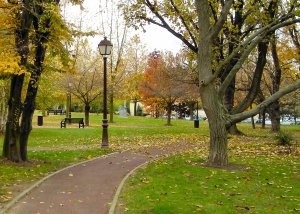
So I’m sitting here and staring at my screen. My eyes go in and out of focus. I’m having a real tough time figuring out what to write next. It doesn’t matter if I’m updating an existing work or if I’m staring at a blank screen, I just can not get the words to start flowing.
Has this ever happened to you? Really? You mean I’m not alone? Whew. I was worried there for a moment.
The question becomes this, what do you do when you’re having those points where words just do not want to come out of your head? Do you just sit there and wait? Do you fire up a first-person shooter? Do you access twitter and pretend like that’s writing? Log onto facebook?
You know what I do? I change my point of view.
I want you to stand up (if you can do that right now) and look around at your surroundings. What’s around you right now? Are you at a desk with a wall in front of you? Are you at the local Starbucks drinking a coffee and listening to music? Are you sitting at the kitchen table with the kids running by? Are you on a crowded bus trying to type out a few words during your commute? Take a moment and type out a description of where you’re currently sitting.
Next I want you to get up and walk outside. If you’re already outside, change the place you’re currently at. Now I want you to take a moment and just take a deep breath. Look around outside and try, in your mind, to describe what you see. What you hear. What you smell. How it makes you feel. Is it cold outside? Does the sun warm your face? Is there traffic going by? Are there people or animals around? Do you overhear a conversation? Is the wind blowing through the trees?
Now go back to where you were and describe what just happened. Don’t think about what just happened but instead describe in as much detail as you can what you experienced. Did a black-and-white dog run by? Perhaps a lady with an oversized, purple purse and her hair up in curlers walked past. How many cars did you see? Get in everything you can. Describe the terrible sound the car made as it rattled and sputtered by. Try and catch as much detail as you can about that couple of minutes of experience.
Once you’re written this down, take the time to start on your work that just sitting there waiting for you. Use that experience to spice up a scene you’re working on. Include that dog or that lady or that car that went by or the smells wafting by on the breeze. Try to take something from what you just experienced and include that in your work to make the scene a little richer, a little more than it was just a moment before.
If you’re ever stuck again, just give it a try. Poke your head outside, take a deep breath and just watch and listen for a minute or two. If you do type up either what you currently see around your writing area or what you see outside, post it as a comment. I’d love to hear about it.
Until Next week.
WOO WOO!
Unorthodox Writing Tips 3: By Your Bootstraps
I remember when I first started writing. It was the late 80s. I was going to finally write my first novel. I wrote three or four chapters by hand as I didn’t have a computer or typewriter and paper was cheap. After the first four chapters I re-read what I’d written and thought it was terrible. I threw it away.
I tried again and this time got up to six chapters before I threw it all away, again.
This became a cycle for me. I wanted to write, but I couldn’t keep going with what I had written. What I had put down was just awful and I knew no one would ever want to read it. I almost talked myself out of writing all together. But I really wanted to write.
I tried again. This time I made it to what I felt was about the half way mark of the book and decided that this was just far too much work for something so awful. And I threw out all that work, again.
Fast forward a few years. I still had those characters running around inside my head. I had found an artist and he had agreed that it would make a cool comic. I started writing it as a comic book. It was fun and fast to write. I finished the first hand written draft after a month of writing. Sadly, for me, the artist got an apprenticeship with Jim Lee and the comic idea was dead.
This, of course, took the wind out of my sail, but I had a completed storyline. I decided to keep writing it as a comic and look for another artist. I didn’t just write the second story in comic format, I wrote the third as well.
Fast forward a few years. I had trunked my work and wasn’t about to let anyone, except my girlfriend (now my wife), see those words. It was rough, had terrible grammar, but I still liked the story and the characters. I decided to start typing out the handwritten pages and I would clean it up as I went. All in all it came out to roughly 40,000 words. Far too short to be a novel, but it lacked a lot of description and inner monologue.
I went back and added description, but didn’t fully understand internal monologue. After far too long (nearly ten years) editing the first book it weighed in at ~65,000 words. I decided that it was as done as it was going to get and moved on to book two.
This time I took the original pages as an outline for the story and instead began writing from scratch. It was incredible. All I had struggled to learn in the first book flowed with the second book. It took me a week (six days to be exact) to write ~60,000 words. A feat I have never been able to duplicate.
I spent the next month working on book three of that series and it came in at ~70,000 words. Book four in that series also took about a month.
I finally had some confidence in what I was doing, just not enough that I felt like I could share the work with just anyone. I had a very small, select group of people that all gave me advice. For the most part they liked the story, but it was missing something and none of them could really explain what it was missing.
I stopped writing for three years because I had suddenly lost my confidence. I felt like I had just wasted all so many years and my work just wasn’t good enough.
After that hiatus, I spent a year writing short stories. I still wanted to write, but I didn’t want to move on to a bigger work. I wrote one hundred short stories and started submitting like a mad man. I racked up a couple hundred rejections, but I also got a few sales. I sold ten short stories that year. I had to keep going back to those stories to see what I had done that was different than the ones that didn’t sell.
I got back to work on novels after that. I’d do a rough outline to give me a general direction. Some simple research, and BAM! I’d be off and running.
Life happens. Troubles will come into your life. People will die. There are many things that can take the wind out of your sails. All of these affected me and my writing. But through it all I’ve written ten novels. I feel I’ve gotten better at telling a story. I have more fun when I sit down and write. I don’t have as much trouble getting to ‘the end’ as I used to.
What does all this have to do with bootstraps?
Pick yourself up. Realize that not everyone will like what you write. You may not be writing the next best selling novel, but you’re writing. A majority of the people in the world that want to write will never start. You’re already way ahead of the curve by putting words on a page. Even if you’re having a tough time with it, just get the words out. Don’t let life prevent you from getting to ‘the end’.
It’s been said that you can’t polish a turd, but you can shape it into something that looks better than a turd and once you learn how to do that, you can learn how to make something that is worth polishing. If you’ve got nothing then you’ll end with nothing.
Trust yourself. Surround yourself with people whose opinions you trust. Don’t take criticism as an attack on you as a person, but take it to heart and see what you can do to improve what you are doing.
Yes, it took me fifteen years before I saw my first sale, but that’s because I second guessed myself every step of the way and didn’t allow anyone to see my work for a very long time. I didn’t take any advice and instead tried to plow forward on my own. I took the hard way. Many people have taken the hard way to publication. You will be better served if you look and see what others have done before you and follow one of their paths.
If you are excited about your work, let your excitement be infectious. If you’re nervous about your work, try not to let others know how you feel. You need to believe in yourself before others will want to believe in you. So pick yourself up. Get yourself out there. Don’t be afraid of success that can be yours. Take the criticism of your work as ways to improve your craft, not as an attack against you personally. For the most part, people want to help you and help you succeed.
Get out there!
Until Next week.
WOO WOO!
 J.R. Murdock